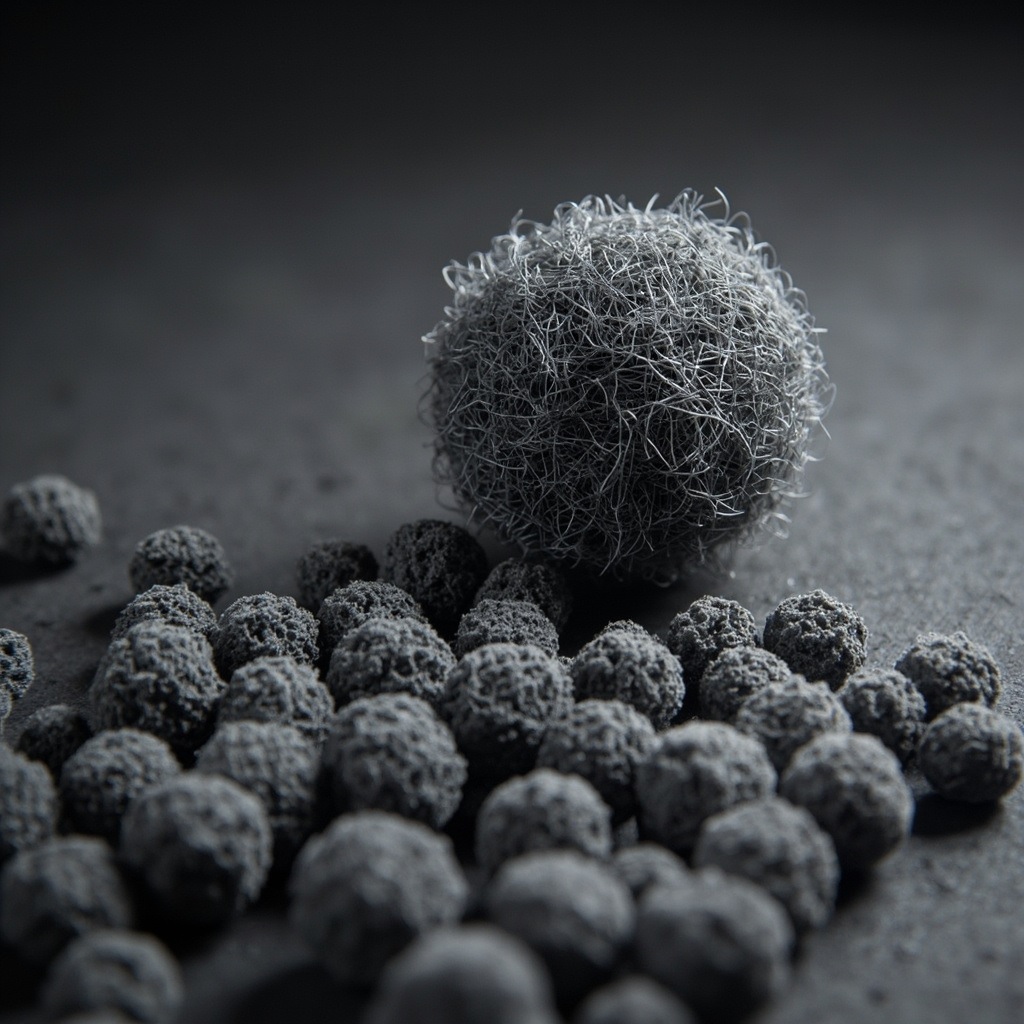
 Let’s cut through the noise. If you are still wrestling with irregular particle shapes, broad size distributions, or clumpy agglomerates in your Spherical Graphite precursor production, you are leaving performance—and profit—on the table. The industry has been chasing uniformity for years, and the answer is not another tweak to milling parameters or a slower sieving line. It is spray drying. This process is not just a drying method; it is a precision engineering tool that transforms chaotic raw materials into ultra-uniform spherical particles with a consistency that batch processes can only dream of.
The magic happens inside the atomizer. A slurry of graphite precursor is broken into fine, controlled droplets, each one acting as its own miniature reactor. As hot gas hits these droplets, solvent evaporates uniformly from all surfaces, pulling the solid content into a perfect sphere. No sharp edges. No random fractures. Just smooth, dense, and highly flowable particles. And here is the kicker: you can dial in the size. Adjust the nozzle pressure, the feed rate, or the drying temperature, and you get a narrow distribution that makes downstream coating, pressing, or sintering steps significantly more predictable. For battery manufacturers, this means fewer short circuits from jagged particles and higher packing density in electrodes.
But uniformity is only half the story. Spray drying delivers a spherical morphology that is inherently superior for handling and processing. Try pouring irregular graphite dust through a hopper. It bridges, clogs, and creates dust clouds. Spherical precursors? They flow like water. This translates directly to less downtime, reduced waste, and safer working conditions. Furthermore, the rapid drying kinetics lock in the amorphous structure or the specific crystalline phase you need, preventing unwanted phase separation that plagues slower evaporation methods. You get a homogeneous composition from the core to the surface, which is critical when those precursors are destined for high-performance anodes or advanced carbon composites.
Cost efficiency is the silent winner here. Traditional methods like mechanical spheronization require multiple passes, high energy input, and constant equipment maintenance due to abrasion. Spray drying is a single-step continuous process. You feed in slurry and collect dry, spherical powder on the other end. No grinding media to replace, no long drying ovens, no labor-intensive sieving cascades. The capital investment pays for itself in reduced operational complexity and higher yield. And because the particles are already spherical, you eliminate the need for expensive post-processing steps like coating or rounding.
The bottom line: if your product demands the highest level of sphericity and size uniformity, spray drying is not just an option—it is the industrial standard that separates commodity-grade material from premium, high-value precursor. The technology is mature, the results are reproducible, and the competitive edge is undeniable. Stop fighting irregular shapes and start engineering them.